The Doorman's Fallacy and the AI-fication of work
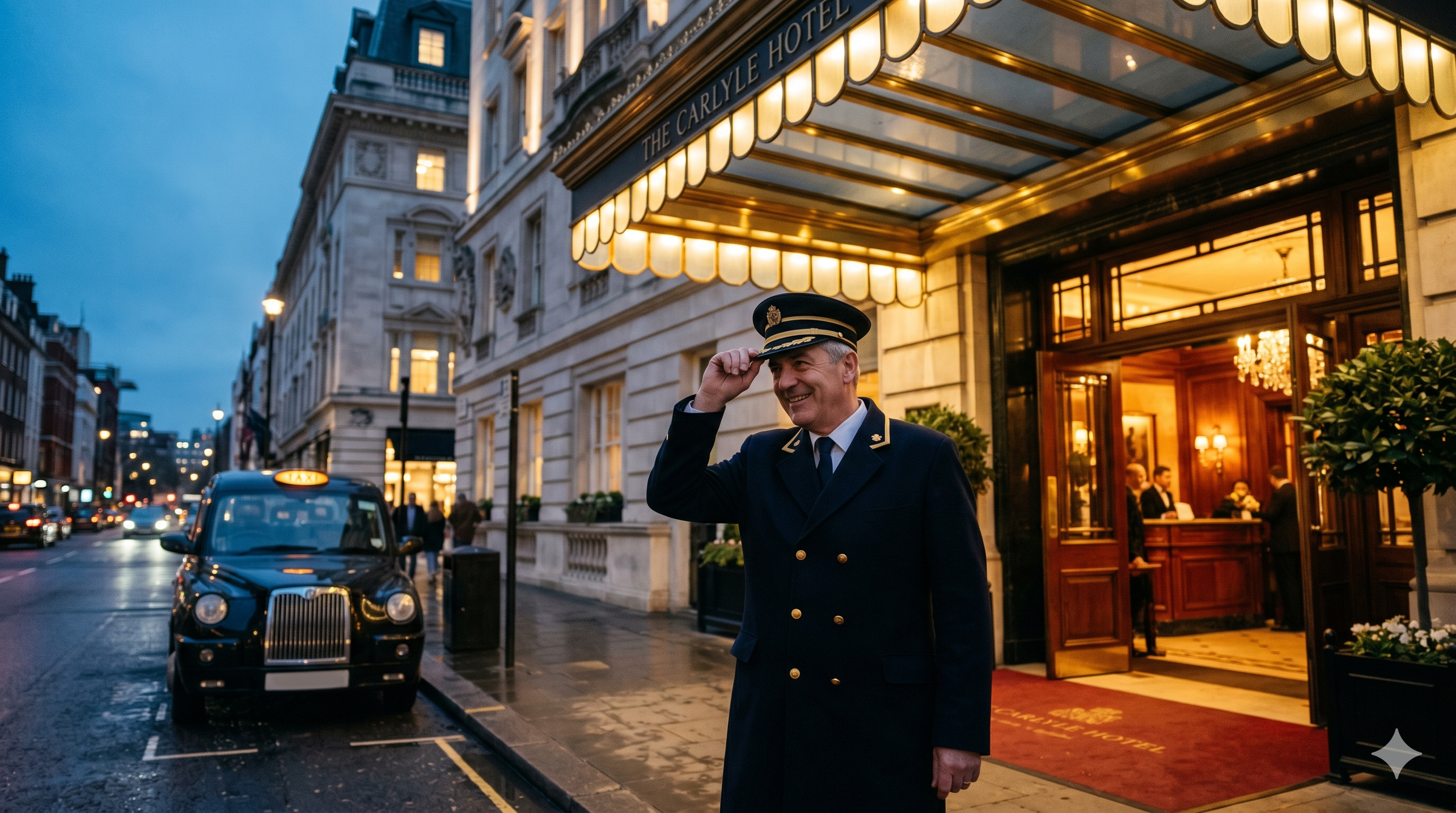
I came across the Doorman's Fallacy recently in a Rory Sutherland talk, and I have been thinking about it a lot.
The setup is simple. Imagine a classy hotel looking to cut costs. They study the doorman. What does he actually do? He opens the door. He hails cabs. He greets guests. Every one of those things can be replaced by a revolving door, a taxi app, and a greeter kiosk. So they let the doorman go.
And the hotel gets worse. Not in any way that shows up on a spreadsheet, but in every way that matters. Because the doorman was never just opening the door.
He remembered the names of regulars. He waved at their kids. He had an arrangement with the cab drivers so they'd swing by at the right hours. He added a quiet sense of class to the hotel's frontage that a glass panel never could. None of that was in his job description. All of it was the job.
Sutherland's point is that whenever we try to break a role down into its visible tasks, we miss the invisible ones. And the invisible ones are often where the real value sits.
Two recent AI launches have got me thinking about this.
Claude Design
Anthropic launched Claude Design yesterday, a tool that creates visuals like prototypes, slides, and one-pagers. A lot of genuinely talented designers have been stuck cranking out posters, social tiles, and paraphernalia they shouldn't be spending their time on. That work gets handled now, and the design community should be glad for it. It frees designers to do what they're actually good at. Sitting with a user and noticing the small hesitation before a click. Understanding what the person on the other side of the screen actually needs, not what they said they needed in the interview. Reading human behaviour. Pushing back on a PM who wants to add one more thing to the nav bar. The visible output is a Figma file. The real work is taste, empathy, and judgement about what to leave out.
The same goes for creative directors, copywriters, and marketing designers. The pushback will come. Aren't those people next? I don't think so. Because that work isn't really about the artefact. It's about the context around the artefact. What illustration fits this brand at this moment. What font carries the right emotional weight. What's happening in the culture this week that changes what lands and what falls flat. That's human context flowing through the work. A model can produce a poster. It can't tell you why this poster, now, for these people.
Claude for Excel
Yes, it can do complex spreadsheet work. But notice who it's really built for. It's not for the accountants or analysts who use Excel as a tool to help them with their analysis and accounting. For them, Excel is just the instrument. It's for the person for whom Excel itself is the chore. The PM who needs a pivot table once a quarter. The founder who wants to model out a scenario without calling a favour. The manager who needs to clean up a messy CSV.
That's the user. And for that user, this is a gift.
And the accountant? A good accountant was never just an Excel pusher. They catch the thing that looks right but feels wrong. They know which number the board is actually going to ask about. They know the history of why a line item is structured a certain way, and what changing it would signal. None of that fits in a cell.
The real pattern
The AI-fication story is not "jobs get replaced." It's that the visible, describable, bullet-pointable part of a job gets replaced, and the invisible part becomes disproportionately more valuable. The taste. The context. The relationships. The judgement about what matters this week that didn't matter last week.
Some jobs will go. People whose work sits almost entirely in the visible, describable part of the role will feel this first, and that's real. But entire professions don't get vanquished overnight. Accountancy isn't ending. Design isn't ending. What's ending is the version of those jobs where the visible output was the whole job. The way to stay relevant is to lean harder into the parts of the work a model can't see. Those skills were always there. They were just subsidised by the drudgery. Now the drudgery is going away, and the skills have to stand on their own.
The doorman's real skill was never opening the door. And if you only measured him by door-openings, you'd fire him and wonder why the hotel felt colder.